


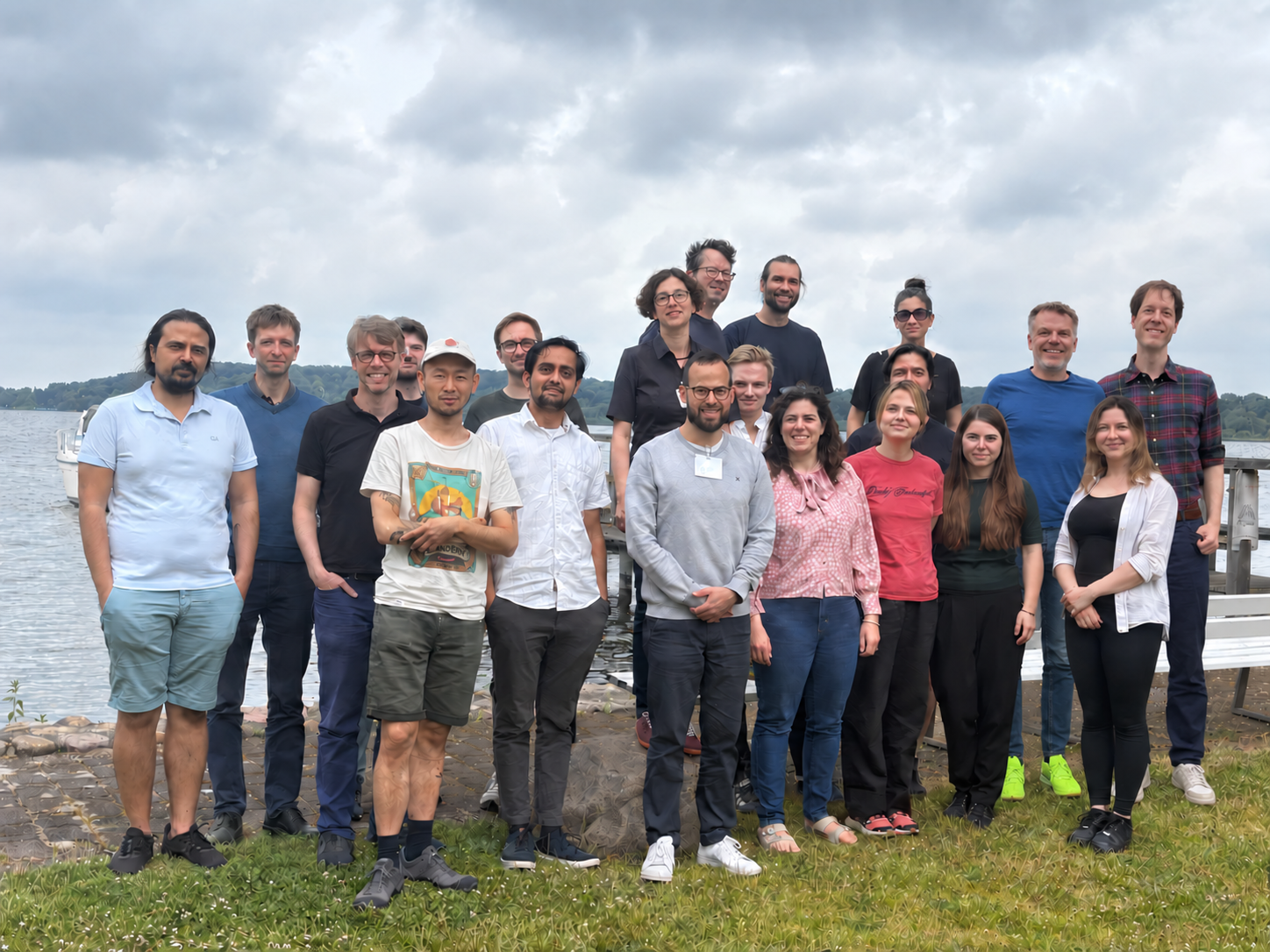
DeSBi Retreat 2026
1-3 June 2026, Caputh
This year's retreat was the last retreat within the first funding period of our Research Unit (RU KI-FOR 5363). It took place from 1 to 3 June 2026 in Caputh and was attended by both principal investigators and members from the first funding period, as well as by potential principal investigators for the second funding period.
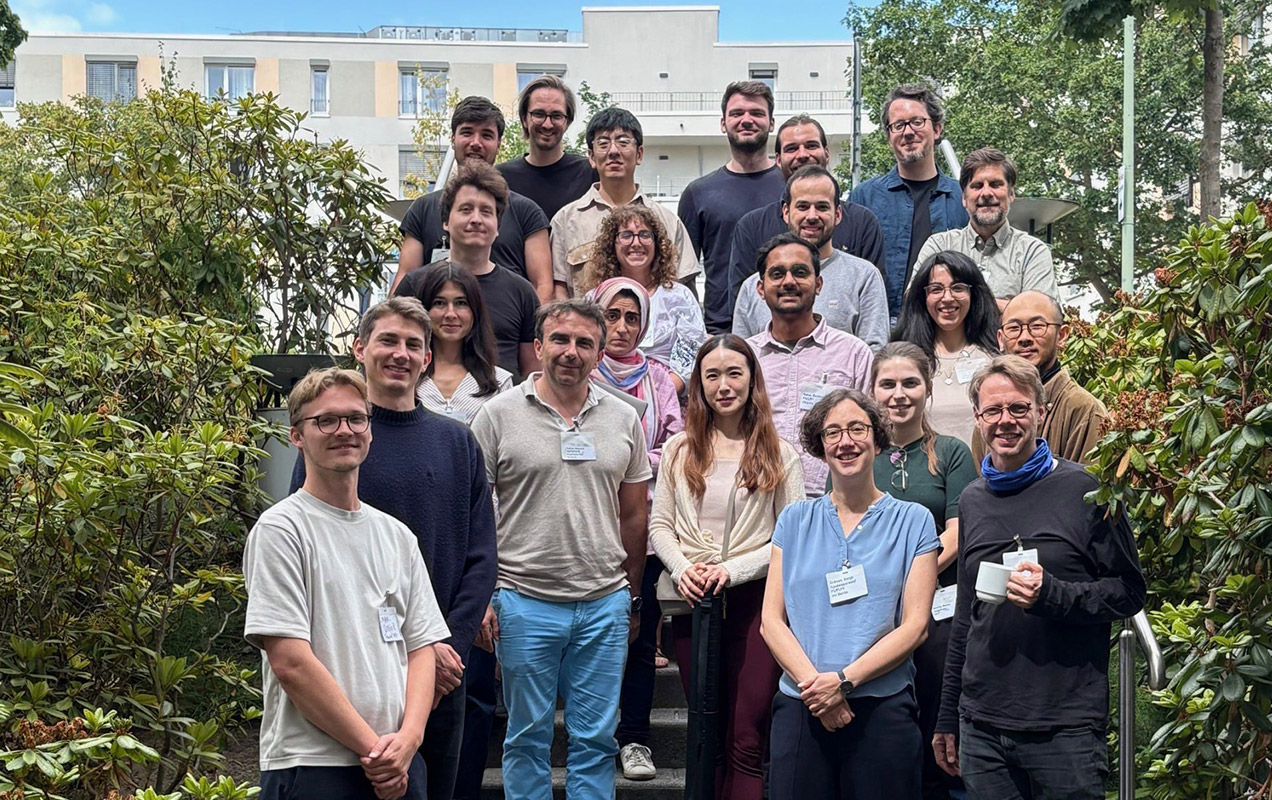
DeSBi Retreat 2025
8 - 9 July 2025
This year, the DeSBi community gathered for its annual retreat at the Dorint Hotel in Potsdam on 8–9 July 2025. The research conducted by the seven teams of the RU was presented in the form of poster sessions, which provided ample opportunity for in-depth discussion thanks to several rounds of presentations.

DAGStat 2025
24 - 28 March 2025
The DeSBi Research Unit organized a dedicated session on its research topics at DAGStat 2025 in Berlin. The session, titled "Fusing Deep Learning and Statistics Towards Understanding Structured Biomedical Data," was chaired by our associated postdoctoral researcher, Georg Keilbar. Oral presentations were delivered by unit PhD students and postdocs: Masoumeh Javanbakht, Marco Simancher, Manuel Pfeuffer, and Sepideh Saran.

DeSBi Joint Seminar Series
KI-FOR 5363 DeSBi
Fusing Deep Learning and Statistics towards Understanding Structured Biomedical Data (DeSBi)
Publications
Controlling for Omitted Variable Bias in Deep Neural Networks (Pfeuffer, M., Rane, R. P., Ritter, K., & Greven, S.)
Published in: NeurIPS 2026
Abstract: Control variables are widely used in statistical modelling to account for omitted variable bias of known confounders. However, they have largely been underexplored in deep learning. This is surprising, given that deep learning models encode image-inferable covariates, such as demographic variables, into their predictions when these covariates are correlated with the outcome---a form of omitted variable bias referred to as 'shortcut learning'. While many existing confound-control or fairness methods try to restrict the correlation of such covariates with model predictions, we show that this fails to correct for omitted variable bias. We therefore propose a control variable approach for deep learning models, based on generalised additive modelling of the effects of model inputs and covariates. As flexible additive models can suffer from concurvity, we introduce an estimation procedure that refits the final layer of a pre-trained network to include covariate effects, using cross-fitting with ridge penalisation. We show how these effects can be orthogonalised with respect to covariates to exclude their mediated effects and that model predictions can be marginalised over the covariate distribution to control for their effect. This yields unbiased, interpretable predictions and offers flexibility to model the desired effects depending on the scientific or fairness objective. We verify our approach using simulated images, and demonstrate consistent estimation of true effects. Existing methods either require more data or fail to recover the true effects. We apply our method to real neuroimaging data with experimentally induced confounding, where it recovers prediction performance to near the level of a model trained on unconfounded data. Code is available at this https URL.
Deep Nonparametric Conditional Independence Tests for Images (Marco Simnacher, Xiangnan Xu, Hani Park, Christoph Lippert, Sonja Greven)
Published in: Journal of Machine Learning Research 27 (2026) 1-73
Abstract: Conditional independence tests (CITs) test for conditional dependence between random variables given a vector of conditioning or confounder variables. As existing CITs are limited in their applicability to complex, high-dimensional variables such as images, we introduce deep nonparametric CITs (DNCITs). The DNCITs combine embedding maps, which extract feature representations of high-dimensional variables, with nonparametric CITs applicable to these feature representations. For the embedding maps, we derive general properties on their parameter estimators to obtain valid DNCITs and show that these properties include embedding maps learned through (conditional) unsupervised or transfer learning. For the nonparametric CITs, appropriate tests are selected and adapted to be applicable to feature representations. Through simulations, we investigate the performance of the DNCITs for different embedding maps and nonparametric CITs under varying confounder dimensions and confounder relationships. We apply the DNCITs to brain MRI scans and behavioral traits, given confounders, of healthy individuals from the UKBiobank, confirming null results from a number of ambiguous personality neuroscience studies, now with a larger data set and with our more powerful tests. In addition, in a confounder control study, we apply the DNCITs to brain MRI scans and a confounder set to test for sufficient confounder control. We provide an R package implementing the proposed DNCITs.
Pioneering new paths: the role of generative modelling in neurological disease research (Seiler, M., & Ritter, K.)
Published in: Pflügers Archiv- European Journal of Physiology (2025) 477:571–589
Abstract: Recently, deep generative modelling has become an increasingly powerful tool with seminal work in a myriad of disciplines. This powerful modelling approach is supposed to not only have the potential to solve current problems in the medical field but also to enable personalised precision medicine and revolutionise healthcare through applications such as digital twins of patients. Here, the core concepts of generative modelling and popular modelling approaches are first introduced to consider the potential based on methodological concepts for the generation of synthetic data and the ability to learn a representation of observed data. These potentials will be reviewed using current applications in neuroimaging for data synthesis and disease decomposition in Alzheimer’s disease and multiple sclerosis. Finally, challenges for further research and applications will be discussed, including computational and data requirements, model evaluation, and potential privacy risks.